Thoughtful Ways to Include Children in a Funeral Service
Discover age-appropriate ways children can participate in a funeral gathering, from creating drawings to sharing memories, with supportive guidance for families.
Including children in a remembrance can help them feel connected to the people who care for them. Families considering funeral Homes in Laredo TX may wonder how to explain the gathering and offer meaningful, age-appropriate opportunities to participate. A gentle approach centers each child’s comfort, preferences, and need for reliable adult support.
Why Including Children Can Matter
Children often notice changes in family routines long before adults explain what has happened. An invitation to participate can help them understand that they belong within the family’s remembrance, even when their emotions look different from those of older relatives. The goal is connection, not a particular reaction.
An appropriate role can give a child something concrete to focus on. Making a drawing, choosing a song, or helping arrange a memory display provides a manageable way to express care. Some children will prefer simply sitting with a trusted adult, and that choice deserves equal respect.
Participation should never be treated as proof that a child is coping well. Feelings can change quickly, and a child who wants to help during planning may prefer to observe on the day. Adults can make space for both possibilities without creating pressure.
Explain What Will Happen in Clear Language
Before the gathering, describe the setting, who may attend, and what the child is likely to see and hear. Simple, concrete explanations are usually more useful than vague expressions. For example, adults can say that people will gather to remember someone who died and may cry because they miss that person.
Encourage questions, but do not demand them. A younger child may ask the same question several times as they process new information. Older children may want more detail about the order of events, where they will sit, or whether they are expected to speak.
If the child will encounter unfamiliar religious or cultural customs, explain their meaning in advance. Let them know that they can watch quietly and ask questions later. A brief rehearsal of the room and sequence can reduce uncertainty without making the occasion feel scripted.
Consider Age, Temperament, and Readiness
Age can provide a starting point, but personality and previous experiences matter just as much. Preschool children may benefit from a short activity and a familiar adult nearby. School-age children might appreciate a choice between two small roles, while teenagers may want to contribute their own ideas.
Ask what the child would like to do instead of assuming a role will be comforting. Offer genuine options, including not taking part. If a child initially agrees to speak, establish a backup reader so they can change their mind without embarrassment.
Children also differ in how much time they can comfortably spend in a formal gathering. Planning for movement, a quiet room, or a brief break can make participation more manageable. These accommodations support the child and help other family members remain focused.
Gentle Ways to Invite Participation
Children can contribute in ways that do not require public speaking. Their involvement may happen during preparation, during the gathering, or afterward. The most helpful activity is one that fits the child’s interests and gives them a sense of choice.
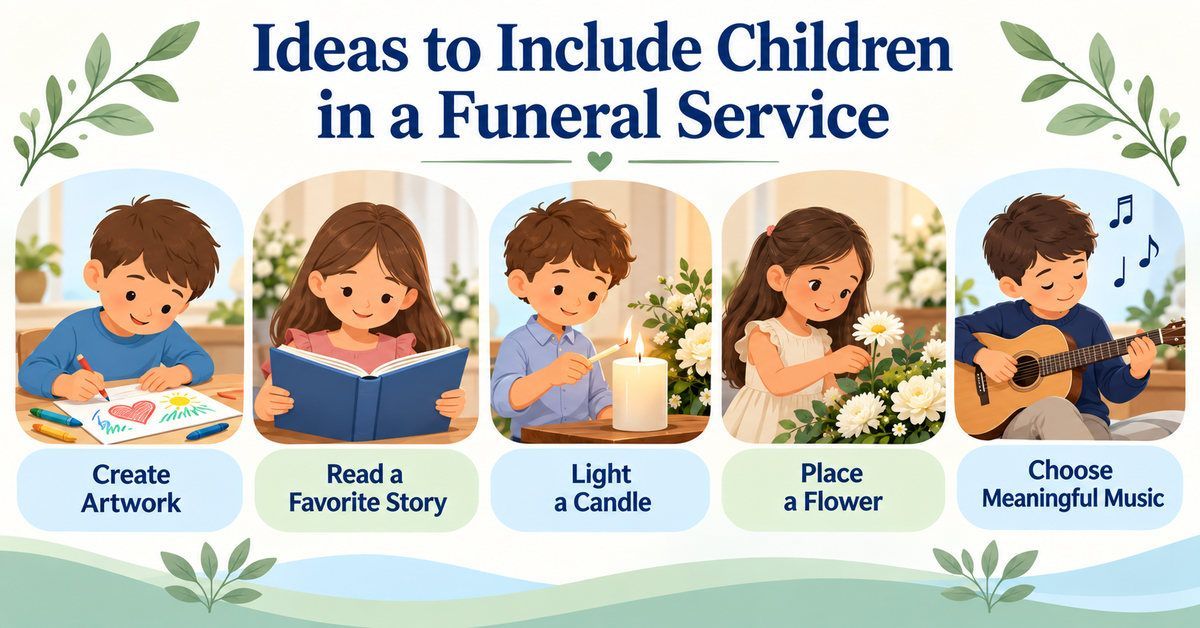
An art activity may be especially useful for a child who finds it difficult to describe feelings. Others may enjoy helping choose meaningful music or preparing a short memory with an adult. Families can preserve these contributions privately or include them in a display with the child’s permission.
- Create a drawing or handwritten message.
- Choose a meaningful piece of music.
- Share a short memory with a trusted adult.
- Help arrange photographs or personal keepsakes.
Preparing Children for a Meaningful Role
Once a child chooses an activity, adults can explain the steps and practice them together. Keep expectations modest and avoid making the child responsible for an important part of the ceremony. A trusted adult should be ready to assist or take over whenever needed.
If the child wants to read or speak, offer a short passage and allow plenty of time to practice. A written copy in large, clear type may help. If they would rather contribute silently, their drawing or selected memory can be shared by someone else, with permission.
An advance conversation about where to sit, when to participate, and how to request a break can help the child feel more secure. Remind them that listening and being present are meaningful forms of participation, too.

Choosing Activities That Fit the Child
Families can use the following examples to match a child’s comfort level with an appropriate contribution. These ideas are flexible rather than rules, and each can be adjusted to suit the family’s customs and the child’s wishes.
The table below compares simple activities, the support they may need, and how children can contribute.
| Activity | Adult Support | Meaningful Contribution |
|---|---|---|
| Drawing | Offer paper and time | Expresses personal memories |
| Choosing music | Suggest a few familiar songs | Adds a child’s perspective |
| Sharing a memory | Listen or read on their behalf | Honors a cherished moment |
| Reading together | Practice a brief passage | Creates a shared tribute |
| Keepsake display | Help arrange selected items | Connects memories visually |
Support Children During the Gathering
Choose one trusted adult who can pay attention to the child’s needs without having another demanding role. This person can answer questions quietly, offer reassurance, and step outside with the child if needed. Knowing who will help often makes the day feel more predictable.
Avoid interpreting silence, laughter, curiosity, or restlessness as disrespect. Children respond to unfamiliar experiences in many ways, sometimes moving between sadness and ordinary play. Calm responses from adults can help them feel safe.
Afterward, offer a chance to talk, draw, or simply rest. Some children will have questions immediately, while others will return to the subject days later. Keeping the conversation open is usually more useful than expecting one complete discussion.
Honor Family Beliefs and Personal Wishes
Families may have cultural or religious customs that shape who participates and how. Explain these practices in language the child understands, and ask whether there is a respectful role they would welcome. An adult can help the child observe traditions without placing responsibility on them.
When the person being remembered served in the military, ways families recognize military dedication and remembrance may inform the gathering. A child might help select a meaningful reading or listen to a family story about that person’s life.
Families making decisions about the form of a farewell can also consider how cremation or burial choices reflect family wishes. These conversations should focus on clear, age-appropriate explanations rather than asking children to make decisions meant for adults.
Create a Flexible Plan Together
Planning works best when adults make a simple outline and share only the details the child needs. Choose a realistic activity, identify who will assist, and prepare any materials ahead of time. The child should know that changing their mind is acceptable.
Family members can use a direct way to coordinate thoughtful family arrangements when discussing practical details. Keeping communication organized gives caregivers more time to support children emotionally.
After the gathering, preserve a drawing, written memory, or chosen song if the child wants to keep it. Revisiting these items later may open gentle conversations about the person being remembered and the family’s continuing connection.
- Ask what the child feels comfortable doing.
- Choose one simple role and a backup adult.
- Prepare materials and explain the sequence.
- Allow breaks or a change of mind.
Frequently Asked Questions
Should every child attend the entire gathering?
Not necessarily. A shorter visit, a break, or another way to participate may suit the child better.
What if a child becomes upset?
A trusted adult can offer reassurance, answer questions, and move to a quieter place if the child wishes.
Can a young child help with planning?
Yes. Small choices, such as selecting a drawing or a familiar song, can give a child a manageable role.
How can adults talk about death with children?
Use clear, age-appropriate language, answer questions simply, and invite future conversations without pressure.
Compassionate Guidance for Your Family
When planning a gathering, families exploring funeral Homes in Laredo TX can ask Gamez & Sons Funeral and Cremation Services about thoughtful ways to include children while honoring personal wishes. Call (956) 701-3459 to discuss your family’s needs, ask about available options, and arrange a supportive conversation at a comfortable pace.